Background:
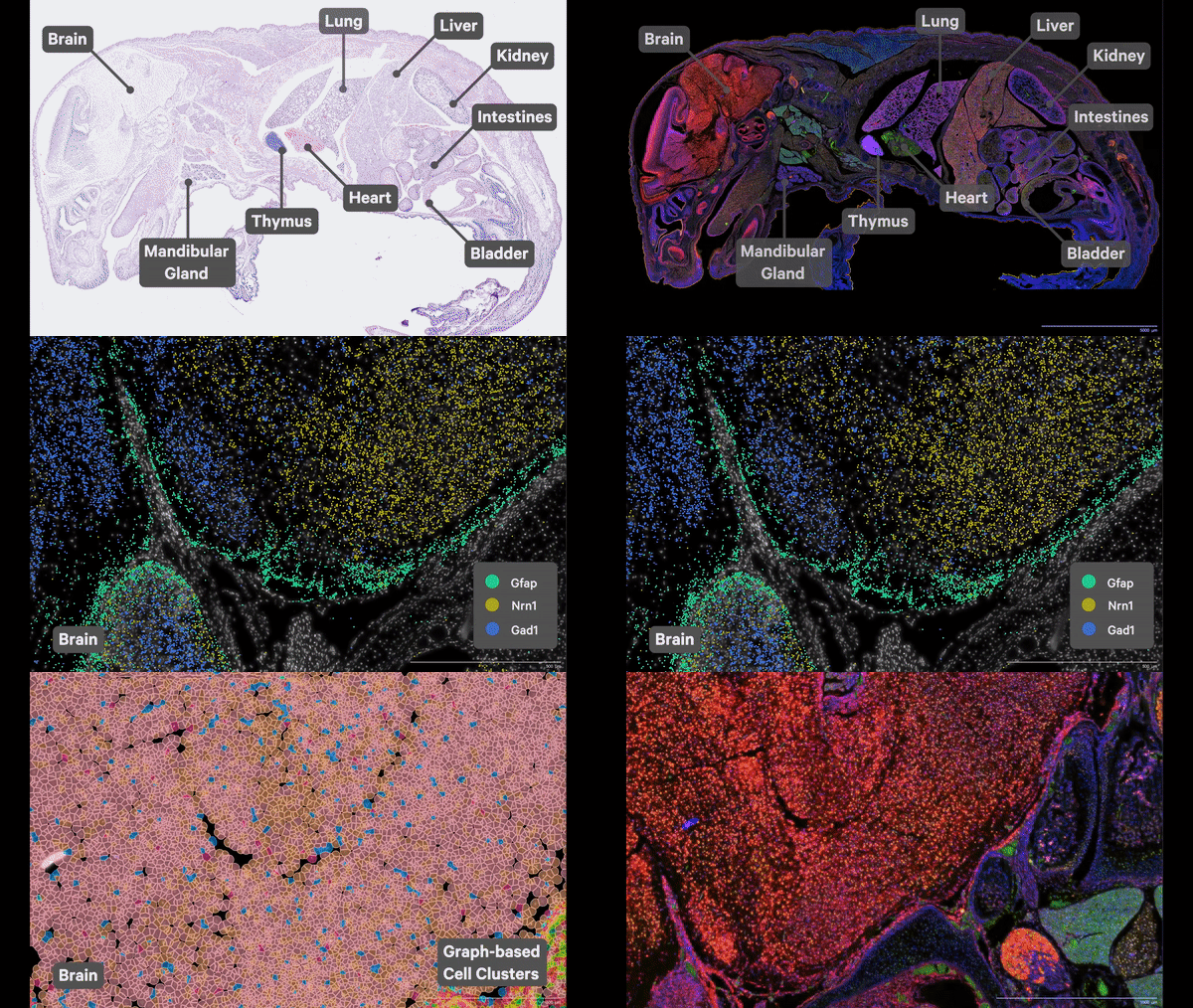
Single cell spatial transcriptomics is a rapidly developing area in the field of sc RNAseq. Unlike spot-based spatial transcriptomics, single cell spatial transcriptomics can provide cellular and even subcellular resolution. Information about spatial coordinates of RNA transcripts within cell and globally in tissue can provide critical insights about its structure and function. Multiple companies have tried to fill this niche of research and provide commercially available platform for performing this sequencing. List of popular commercially available platforms include: 10x Xenium, Nanostring CosMx, and Vizgen MERFISH.
Methods:
We have researched publicly available datasets and our own in-house data to compare CosMx and Xenium. For this purpose we used currently available analysis tools using python and R packages: Squidpy,Giotto,stLearn, Spapros and Seurat.
Results:
I have compared coverage of RNA transcripts within given samples to find platform that provides the best transcript coverage. Additionally, I have estimated experiment and tissue specific batch effects and ways to integrate data preserving biological variability while reducing technical variation. Finally, I have studied multiple tools for targeted gene panel construction used in spatial transcriptomics. These tools allowed selecting 50 additional genes to add to existent commercial gene panels that would best preserve biological variation of human lung tissue.
Conclusions:
Based on data used in my comparison, Xenium platform provided better transcript coverage and specificity. Lack of field of view stitching in CosMx produces cell duplications that may influence analysis. This comparison analysis enabled bringing these platforms to our laboratory and provided a standard pipeline for handling spatial transcriptomics data in the laboratory.

Stanislav Bratchikov
Reseacher in computational biology
I am focused on enhancing clinical decision making. My research interests include development and use of computational methods in the analysis of multimodal data such as -omics data, electronic health records, flow cytometry data.